Excavation work in Hialeah encompasses far more than simply moving soil. It represents a critical, multidisciplinary engineering discipline that forms the foundation for virtually every construction project in the city, from residential foundations and commercial basements to large-scale infrastructure and water management systems. The category covers the full lifecycle of an excavation: initial subsurface investigation, geotechnical design of support systems, dewatering planning, execution, and continuous monitoring to ensure safety and stability. In a densely developed urban environment like Hialeah, where new construction often occurs immediately adjacent to existing structures, roadways, and utilities, the margin for error is exceptionally thin. A poorly planned excavation can lead to catastrophic ground movements, damaging neighboring properties, disrupting essential operations, and endangering workers and the public. This category therefore serves as the essential framework for managing the inherent risks of creating temporary or permanent openings in the ground, ensuring that projects proceed without incident and that the built environment remains protected.
The local geology of Hialeah presents a very specific set of challenges that directly dictate excavation methodologies. The city sits atop the Biscayne Aquifer, characterized by porous, highly transmissive limestone and sand formations. The water table is exceptionally high, often just a few feet below the ground surface, making groundwater control a dominant concern for any excavation deeper than a shallow footing. The limestone itself can be erratic, with zones of hard rock interspersed with loose, cavernous pockets or solution features, which can cause sudden collapses or uncontrolled water inflow. This is particularly critical for projects involving geotechnical analysis for soft soil tunnels, where the interface between saturated sands and weathered limestone demands precise tunnel boring machine selection and face support. The combination of a high water table and variable rock conditions means that standard cut-and-cover or braced excavation methods must be carefully adapted, often requiring a sophisticated geotechnical design of deep excavations that integrates robust dewatering systems, secant pile walls, or diaphragm walls to cut off groundwater and carry out positive ground support.
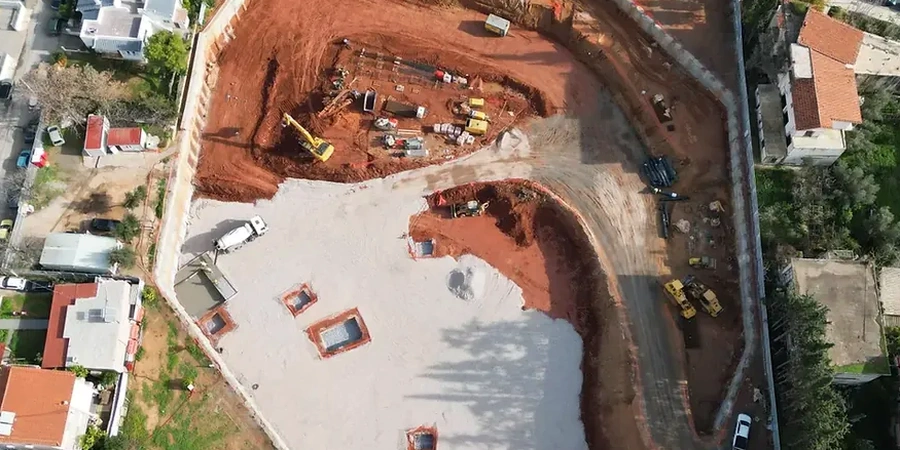
Regulatory compliance in Hialeah is governed by a combination of federal, state, and local codes, with safety standards from the Occupational Safety and Health Administration (OSHA) forming the non-negotiable baseline. OSHA's 29 CFR 1926 Subpart P is the primary regulation, mandating a strict classification system for soil and rock, the use of protective systems like sloping, benching, shoring, or trench boxes for excavations deeper than five feet, and the requirement for a daily inspection by a Competent Person. Crucially, any excavation deeper than four feet must have a means of egress, and atmospheric testing is required if a hazardous atmosphere is possible. Florida's building code, which incorporates the International Building Code (IBC), adds requirements for the protection of adjacent structures and right-of-way. In Miami-Dade County, which has jurisdiction over Hialeah, the Department of Environmental Resources Management (DERM) imposes additional stringent regulations concerning dewatering and discharge into the stormwater system due to the sensitivity of the Biscayne Aquifer and Biscayne Bay. Permits are required for dewatering operations, and the quality of discharged water must meet strict turbidity and contaminant limits, directly influencing the design of excavation support and water treatment systems.
The types of projects in Hialeah that demand professional excavation engineering are diverse and ever-present. High-density residential and mixed-use developments typically include one or two levels of underground parking, requiring deep excavations that extend well below the water table and often abut public streets. Municipal infrastructure projects, such as the installation or rehabilitation of deep gravity sewers, storm drains, and water mains, frequently require trenchless techniques or deep, linear excavations with sophisticated shoring. The ongoing expansion of industrial and logistics facilities in the area involves large-footprint excavations for building pads and retention ponds, where soil stabilization and dewatering on a massive scale are necessary. Transportation projects, including bridge abutments for expressway improvements, also fall under this category. Regardless of the project type, the integration of a comprehensive geotechnical excavation monitoring plan is no longer optional but a standard of care. This involves deploying instruments like inclinometers, piezometers, and settlement points to track the performance of the support system and the response of the surrounding ground, providing real-time data that allows engineers to verify design assumptions and trigger contingency measures before a minor movement becomes a major failure.
Common questions
What is the single biggest geotechnical challenge for excavations in Hialeah?
The dominant challenge is controlling groundwater due to the extremely high water table of the Biscayne Aquifer. Excavations more than a few feet deep almost invariably encounter water, requiring continuous dewatering, cut-off walls, or other impermeable barriers to create a stable, dry work environment and prevent base instability or heaving in the porous limestone and sand formations.
When is a mandatory excavation protective system required by OSHA in Hialeah?
OSHA 29 CFR 1926 Subpart P mandates protective systems like sloping, shoring, or trench shields for all excavations five feet or deeper, unless they are made entirely in stable rock. For excavations under five feet, a Competent Person must inspect and determine if a protective system is necessary based on soil conditions, with no vertical faces allowed in unstable material.
How do local Miami-Dade County regulations affect excavation dewatering plans?
Miami-Dade County's DERM strictly regulates dewatering discharge to protect the aquifer and Biscayne Bay. A permit is required, and discharged water must meet specific quality standards for turbidity and contaminants. This often necessitates on-site water treatment systems, such as filtration or sedimentation tanks, which must be factored into the excavation design and logistics from the start.
What are the signs of potential ground instability during an active excavation?
Key warning signs include new or widening cracks in the ground surface or adjacent pavement, rapid settlement of nearby structures, bulging or raveling of an excavation face, sudden changes in water inflow or turbidity, and readings from monitoring instruments like inclinometers and settlement points that exceed predetermined threshold limits. Any such sign requires immediate suspension of work and reassessment.