In the realm of geotechnical engineering, 'Improvement' encompasses a suite of specialized techniques designed to enhance the engineering properties of soil and rock, ensuring that the ground beneath our structures is safe, stable, and durable. In Hialeah, Florida, a city characterized by rapid urban development and a unique geological setting, ground improvement is not merely an option—it is a fundamental necessity. This category covers methods ranging from deep densification to the installation of stiff reinforcing elements, all aimed at mitigating risks like excessive settlement, bearing capacity failure, and liquefaction. For a city built on challenging ground, understanding and applying these techniques is the cornerstone of resilient infrastructure, from commercial high-rises to essential public works.
Hialeah's subsurface conditions are dominated by the South Florida limestone and sand formations, which present a deceptive mix of challenges. Near the surface, loose, poorly graded sands and silty sands are common, often interbedded with soft organic layers and underlain by porous limestone. This stratigraphy translates directly into geohazards: the loose sands are highly susceptible to significant settlement under load and, critically, to liquefaction during seismic events. The high water table, typical of the region, exacerbates these issues, making excavation unstable and reducing the effective stress in granular soils. Therefore, any substantial structure in Hialeah must contend with the potential for differential settlement and a loss of soil strength under dynamic loading.
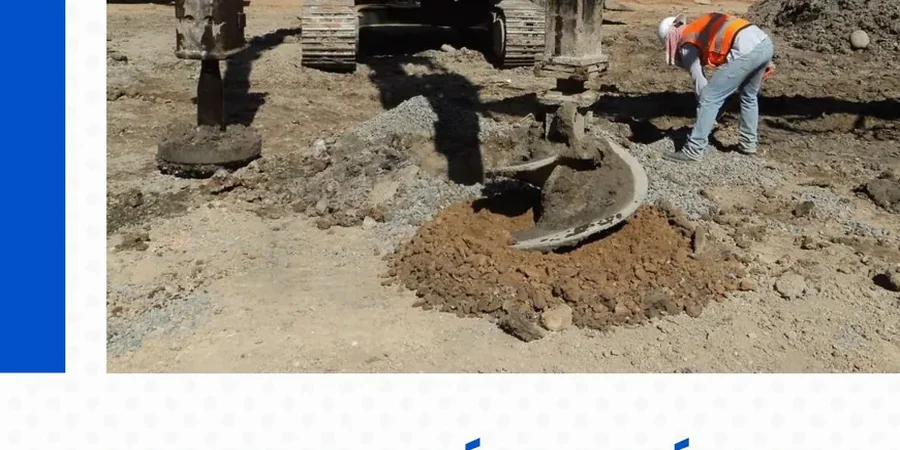
All ground improvement work in Hialeah is governed by the Florida Building Code (FBC), which incorporates and amends the International Building Code (IBC) with state-specific provisions for wind and flood loads. The FBC mandates thorough geotechnical investigations in accordance with Chapter 18, and any improvement design must be substantiated by a Florida-licensed Professional Engineer. The design methodologies are rooted in accepted standards from the American Society of Civil Engineers (ASCE) and the Federal Highway Administration (FHWA). For instance, liquefaction mitigation designs must meet performance criteria outlined in ASCE 7, while deep foundation elements, often used in conjunction with improvement, are detailed in IBC Chapter 1810. Adherence to these codes is not just a legal requirement but a critical framework for ensuring public safety in a region prone to hurricanes and flooding.
The types of projects in Hialeah that routinely require advanced ground improvement are diverse. Large-scale commercial developments, such as the shopping centers and warehouses near the Miami-Dade industrial corridor, often demand rigorous settlement control, making techniques like stone column design a primary solution. Residential towers and parking garages, which impose heavy column loads, frequently rely on ground improvement to avoid costly deep pile foundations. Critical infrastructure, including hospital expansions and emergency response facilities, must remain operational after an earthquake, necessitating liquefaction mitigation through methods like vibrocompaction design. Even transportation projects, from highway overpasses to the Metrorail extensions, use these techniques to stabilize embankments and approach fills on soft native soils.
Available services
Common questions
What is ground improvement and when is it necessary in Hialeah?
Ground improvement is the process of enhancing soil properties to increase bearing capacity, reduce settlement, and mitigate liquefaction. In Hialeah, it becomes necessary due to prevalent loose sands and a high water table, which create risks for any major structure. A geotechnical report will specify if native soils are unsuitable for conventional shallow foundations, triggering the need for improvement.
Which building codes regulate ground improvement design in Florida?
Ground improvement in Hialeah is strictly regulated by the Florida Building Code (FBC), which adopts the IBC with local amendments. Key chapters include FBC Section 1803 for geotechnical investigations and Section 1810 for deep foundations. All designs must be sealed by a Florida-licensed Professional Engineer and comply with referenced standards from ASCE and FHWA to ensure safety and performance.
What are the most common soil problems that improvement techniques solve?
The primary problems addressed are excessive total and differential settlement, low bearing capacity, and liquefaction potential. In Hialeah's geology, loose granular soils can densify and settle under load, while seismic shaking can cause a sudden loss of soil strength. Improvement techniques compact or reinforce the ground to eliminate these hazards and stabilize the foundation subgrade.
How do I know which ground improvement method is right for my project?
The selection depends on soil conditions, structural loads, and performance criteria, all determined by a comprehensive geotechnical investigation. A specialist analyzes factors like sand gradation, silt content, and groundwater depth to choose between methods such as deep vibratory compaction for clean sands or stone columns for silty soils. The final design is a tailored engineering solution, not a one-size-fits-all product.