Roadway engineering in Hialeah encompasses the full spectrum of geotechnical and structural design operations required to build durable, safe, and compliant pavements for our unique South Florida environment. From initial soil testing to final pavement selection, this category covers the critical evaluations and design methodologies that ensure roads, parking lots, and industrial surfaces can withstand both traffic loads and our challenging subtropical climate. Proper roadway design is not just about laying asphalt or concrete; it demands a thorough understanding of the underlying ground conditions to prevent premature failures like rutting, cracking, and potholes that plague poorly engineered surfaces in our region.
Hialeah's geology presents specific challenges that make expert geotechnical input non-negotiable. The city sits atop a shallow limestone bedrock typical of Miami-Dade County, often overlain by layers of porous sand and organic silts. This karst topography means the ground can be highly variable, with a high water table that fluctuates seasonally and increases the risk of saturation and loss of soil strength. The presence of soft, compressible organic layers beneath the surface can lead to differential settlement, making a detailed CBR study for road design the essential first step in any project to quantify the soil's bearing capacity and predict its behavior under load.
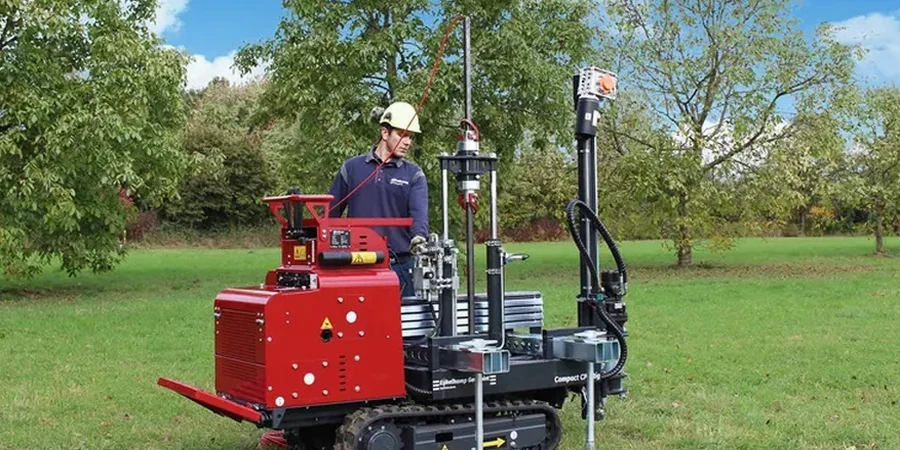
All roadway projects in Hialeah must adhere to a strict hierarchy of standards to ensure longevity and public safety. Designs are governed by the Florida Department of Transportation (FDOT) Standard Specifications for Road and Bridge Construction, which dictate material properties, compaction requirements, and structural thicknesses. Locally, Miami-Dade County Public Works Manual provides additional regulations, particularly for drainage and subgrade preparation to cope with our intense rainfall. Crucially, the American Association of State Highway and Transportation Officials (AASHTO) Guide for Design of Pavement Structures forms the analytical backbone for both flexible pavement design and rigid pavement design, ensuring a uniform, engineered approach to layer thickness and material durability.
These comprehensive roadway operations are critical for a diverse range of projects that shape Hialeah's infrastructure. They are fundamental for municipal arterial and collector roads, where heavy bus and truck traffic demands a robust structural section. Commercial developers rely on this expertise for large-scale parking lots and distribution center yards, where improper design can lead to costly maintenance liabilities. Residential subdivisions require properly engineered subgrades and pavements to meet city code and carry out long-term value to homeowners. Regardless of the project type, the integration of geotechnical data with a rigorous design methodology is what separates a pavement that lasts for decades from one that fails after a few seasons.
Common questions
Why is a geotechnical investigation so critical before designing a roadway in Hialeah?
Hialeah's soil conditions are highly variable, with shallow limestone, sand, and organic silts creating a risk of differential settlement and weak subgrade support. A geotechnical investigation, including a CBR study, quantifies the soil's strength and identifies problematic layers. This data is essential to design a pavement structure that won't prematurely crack, rut, or fail due to the high water table and variable ground conditions typical of Miami-Dade County.
What is the main difference between flexible and rigid pavement design for a project in Hialeah?
Flexible pavement, typically asphalt, distributes loads through a layered system to the subgrade, making it more sensitive to soil strength. Rigid pavement, or concrete, uses its structural stiffness to bridge minor subgrade weaknesses. In Hialeah, the choice often depends on traffic loads and long-term maintenance; rigid pavements resist deformation from heavy, static loads better, while flexible pavements are more easily repaired after utility cuts.
Which Florida regulations govern the design of a new roadway in Hialeah?
Roadway designs must comply with the Florida Department of Transportation (FDOT) Standard Specifications for Road and Bridge Construction, which set the minimum standards for materials and methods. Additionally, the Miami-Dade County Public Works Manual and the AASHTO Guide for Design of Pavement Structures are fundamental references that dictate the structural design process, drainage requirements, and safety standards for any public or private roadway project.
How does the high water table in Hialeah affect roadway performance?
A high water table saturates the subgrade soil, drastically reducing its strength and load-bearing capacity. This can lead to pavement pumping, where water and fine soil are ejected through cracks under traffic loads, causing erosion and void formation. Effective roadway design in Hialeah must incorporate proper drainage, moisture-conditioned subgrade preparation, and sometimes underdrains to keep the pavement structure dry and stable.